A young goatherd from La Gomera is swept from the island he knows into the Atlantic voyage of Columbus. In this opening adventure, personal attachments and unforeseen danger intersect with the expedition of 1492. Cienfuegos must adapt as the familiar boundaries of his life disappear.
Born into poverty and orphaned young, Eva Luna discovers a way to shape her life through storytelling. Her encounters with servants, performers, refugees and revolutionaries connect a personal search for love and independence with a changing South American society.
A knight who has neglected the people around him discovers that he can no longer remove his armour. His search for a way out becomes an allegorical journey through the emotional barriers that prevent him from knowing himself and caring for others.
An elderly Calabrian farmer moves to Milan for medical treatment and discovers an unexpected tenderness toward his young grandson. Far from the world that formed him, family intimacy and a late encounter with love change his understanding of the life he has left.
Florentino Ariza and Fermina Daza fall in love as young people, but she eventually marries Dr Juvenal Urbino. Across the following decades, their separate lives unfold in a Caribbean city. Florentino’s enduring attachment frames a story of marriage, memory and the changes that time brings to desire.
Raised in poverty in London, Samantha Hargrave wants to become a physician and surgeon in a profession that excludes women. Her ambition takes her to America and an unconventional apprenticeship. Love, training and resistance to prejudice shape her struggle to build a life in medicine.
Elías Tarsis and Marc Amary face each other in a world chess championship whose stakes reach beyond the board. Their histories, attachments and political surroundings enter the struggle between them. Arrabal turns the contest into a novel about rivalry and power, where calculating the next move cannot contain the disorder of human lives.
The fortunes of the Trueba family unfold under the authority of the landowner Esteban Trueba. Intimate relationships, political conflict and spiritual experience become inseparable as the family’s private history is shaken by wider social change.
Ignatius J. Reilly moves through New Orleans with grand opinions and little patience for the people around him. His encounters with an eccentric cast of neighbours and workers generate a comic portrait of clashing ambitions, social pretensions and everyday disorder.
Gacel Sayah offers shelter to two fugitives in the Sahara. When soldiers violate that protection, he sets out to answer an offence that the authorities scarcely understand. His journey pits the demands of hospitality and honour against the power of a modern state and the limits of vengeance.
In occupied Poland in 1941, two doctors devise a false typhus epidemic to protect the people of a town on the railway to Auschwitz. Their deception places medical ingenuity alongside armed resistance, as ordinary residents face the risks and moral choices of opposing Nazi rule.
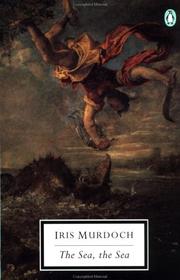
Retired theatre director Charles Arrowby moves to the coast to write about his life and escape its entanglements. An encounter with his first love disrupts that retreat. His account gradually exposes the distance between the story he tells himself and the desires of the people around him.
Different voices reconstruct the life of Mararía, a woman whose beauty and misfortune haunt the village of Femés. Against Lanzarote’s volcanic landscape, memories mingle with rumour and desire. Her story reveals a community shaped by isolation, resentment and the harsh consequences of its judgments.
Retired teacher Dunstan Ramsay looks back on a life shaped by a childhood incident and its lasting consequences. War, guilt and a fascination with saints and illusion connect his memories, as apparently minor actions reveal their influence on other people’s lives.
Under a Peruvian dictatorship, private lives unfold within a society shaped by repression and moral compromise. Vargas Llosa’s novel examines how political corruption enters ordinary relationships, bringing the choices of individuals into contact with the wider damage caused by authoritarian power.
Growing up in a struggling Brazilian family, Zezé finds refuge in imagination and in the orange tree he treats as a friend. His mischievous adventures and an unexpected friendship with an adult unfold against a childhood marked by poverty, harsh punishment and a longing for affection.
Seven generations of the Buendía family live out their desires and conflicts in the fictional town of Macondo. The novel interweaves everyday life with extraordinary events, following the repetitions and transformations that shape a family and its world.
Calvino transforms ideas about the universe and the evolution of life into stories told by improbable beings. Cosmic distances, changing matter and the origins of existence become occasions for recognisable emotions, as scientific speculation meets memory, longing and playful invention.
A tree and a boy share a bond that changes as the boy grows older and returns with new needs. Through spare language and drawings, Shel Silverstein follows what each gives and receives, leaving space to reflect on affection, dependence and the passage of time.
Horacio Oliveira’s relationship with La Maga forms part of a restless search for meaning and connection. Cortázar’s novel invites different routes through its chapters, making the reader’s choices part of an experiment in narrative, uncertainty and the experience of reading.